
Understanding Child Activity Avoidance
Child Development, Occupational Therapy, Sensory, Motor Skills
Why does my child avoid activities that other kids seem to enjoy?
Children often avoid activities because those activities are harder, more uncomfortable, more overwhelming, or less rewarding for them than they are for other children. The reason may be sensory processing differences, motor skill challenges, attention difficulties, anxiety, low confidence, developmental delays, or a combination of factors.
When a child consistently avoids specific activities, the behavior is often a clue that something underneath the surface deserves closer attention—not simply a matter of preference or motivation.
Key takeaways
- Custom HTML/CSS/JAVASCRIPT
What does activity avoidance actually mean?
As an occupational therapist, I rarely view avoidance as the real problem.
Instead, avoidance is usually the strategy a child has developed to cope with a challenge.
For example:
A child who avoids coloring may actually struggle with hand strength.
A child who refuses birthday parties may be overwhelmed by noise and crowds.
A child who avoids sports may have difficulty with balance and coordination.
A child who resists playground equipment may feel insecure about movement and heights.
A child who avoids crafts may have trouble with fine motor planning.
From the outside, it can look like disinterest. Underneath, there is often a reason.
Could sensory processing differences be causing the avoidance?
Yes. Sensory processing challenges are one of the most common reasons I see children avoid activities.
Children receive information through multiple sensory systems, including:
Touch
Movement (vestibular system)
Body awareness (proprioception)
Sight
Sound
Taste and smell
If sensory information feels overwhelming, uncomfortable, or unpredictable, a child may avoid situations that trigger those sensations.
Common sensory-related avoidance behaviors
Activity Avoided Possible Underlying Challenge Birthday parties Noise sensitivity Playground equipment Movement sensitivity Arts and crafts Tactile sensitivity Haircuts Touch sensitivity Team sports Movement and coordination challenges School assemblies Auditory overload Certain clothing Texture sensitivity Messy play Tactile defensiveness
If sensory concerns seem to be part of the picture, parents may also find helpful information in the spoke page "What Is the Best Evaluation for Sensory Concerns?"
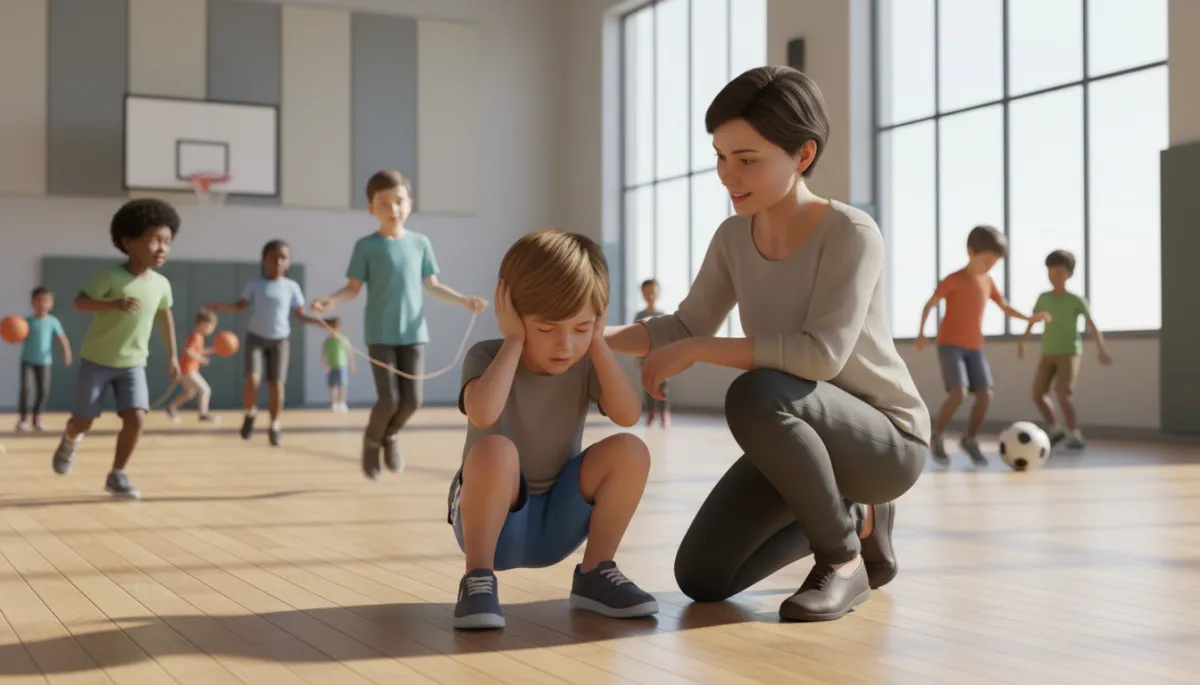
Sensory overload can make ordinary events feel unmanageable, leading children to opt out.
Could motor skill difficulties be the reason?
Absolutely.
Many activities children enjoy depend on motor skills that adults often take for granted.
These include:
Balance
Coordination
Hand strength
Bilateral coordination
Motor planning
Visual-motor integration
A child who struggles in these areas may learn that activities are frustrating rather than fun.
For example:
A child may avoid soccer because they cannot coordinate kicking while running.
A child may avoid crafts because cutting with scissors feels difficult.
A child may avoid playground games because they struggle to keep up physically with peers.
Over time, repeated experiences of difficulty can lead to avoidance.
Could anxiety or confidence be playing a role?
Yes.
Children who have experienced repeated struggles often become aware that certain situations are difficult for them.
Eventually they may begin avoiding activities before the challenge even occurs.
Parents often hear statements like:
"I'm not good at that."
"I don't want to."
"That's boring."
"You do it."
"Can we leave?"
Sometimes this reflects anxiety.
Sometimes it reflects low confidence.
Sometimes it reflects a child trying to avoid feeling unsuccessful.
This is one reason it's important to understand whether avoidance is driven by an emotional concern alone or whether a developmental challenge is contributing to the anxiety.
When should parents be concerned about activity avoidance?
Occasional preferences are normal.
Most children have activities they simply do not enjoy.
I become more concerned when avoidance is:
Consistent
The child avoids the same activities repeatedly over months or years.
Expanding
Avoidance starts affecting multiple areas of life.
For example:
School participation
Sports
Social activities
Family outings
Self-care tasks
Affecting confidence
The child frequently compares themselves negatively to peers.
Creating family stress
Daily routines become battles because the child resists participating.
If these patterns are present, it may be worth investigating what is driving the behavior.
How can parents tell whether this is a phase or something more?
One question I often ask parents is:
"What happens when your child tries the activity?"
The answer usually provides important clues.
It may be a preference if:
The child can do the activity successfully.
The child participates when encouraged.
The avoidance is inconsistent.
No significant frustration occurs.
It may be an underlying challenge if:
The child becomes upset quickly.
The child struggles more than peers.
The child appears physically awkward or fatigued.
The child consistently refuses similar activities.
Teachers or coaches notice difficulties as well.
If you're trying to decide whether concerns are significant enough to investigate further, parents often find value in the spoke page "Should I Get an OT Assessment or Wait and See?"
How can a private occupational therapy assessment help?
A private occupational therapy assessment can help identify the reasons behind activity avoidance.
Rather than focusing only on behavior, the evaluation looks at the skills that support participation.
Depending on the child, assessment areas may include:
Sensory processing
Fine motor skills
Gross motor skills
Coordination
Balance
Motor planning
Visual-motor integration
Self-regulation
Daily living skills
The goal is to understand why participation is difficult and determine whether support is needed.
Many parents tell me their biggest relief after an evaluation is finally understanding what has been driving the behavior.
📌 Key Takeaway: If you're trying to determine whether a professional evaluation is the right next step, read my complete guide on when a private occupational therapy assessment is worth it.
What can parents do right now?
Before assuming a child is simply being difficult or unmotivated, try observing patterns.
Ask yourself:
Which activities are avoided?
What do those activities have in common?
Do they involve noise, movement, coordination, or fine motor skills?
Does avoidance occur at home, school, or both?
How does the child react when asked to participate?
Patterns often reveal much more than isolated incidents.
When the reasons behind avoidance become clearer, the best next step usually becomes clearer as well.
Frequently asked questions
Is it normal for my child to avoid activities other kids enjoy?
Yes, every child has personal preferences. Concern increases when avoidance is consistent, affects multiple activities, interferes with daily life, or is accompanied by noticeable struggles compared to peers.
Can sensory issues make a child avoid social activities?
Yes. Loud environments, crowded spaces, unexpected touch, and overwhelming sensory input can make social events difficult for children with sensory processing differences.
Why does my child avoid sports and playground activities?
Possible reasons include balance difficulties, coordination challenges, motor planning problems, movement sensitivities, low confidence, or previous experiences of frustration.
Should I force my child to participate?
Forcing participation rarely addresses the underlying issue. It's usually more effective to identify why the activity is difficult and provide appropriate support or accommodations.