Private OT vs School Evaluation: Key Differences
Occupational Therapy, School Services, Parent Guide
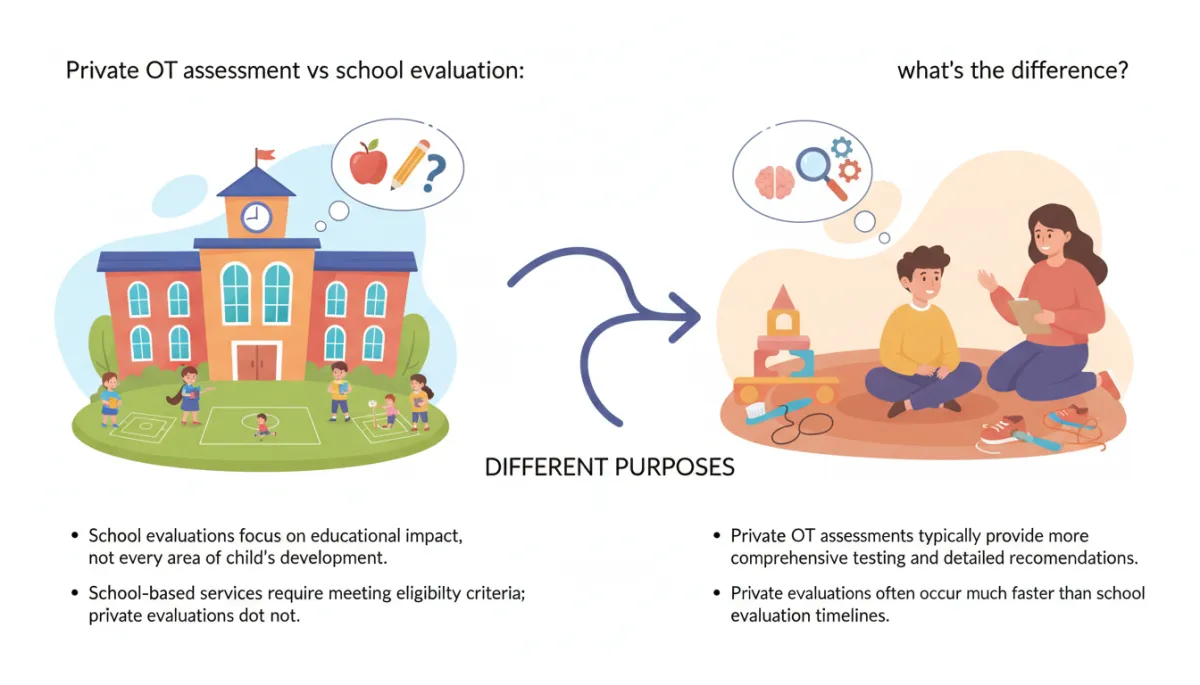
Private OT assessment vs school evaluation: what's the difference?
A private occupational therapy assessment and a school evaluation may look similar on the surface, but they answer very different questions for families. Understanding how they differ can help you choose the right path for your child.
Key takeaways at a glance
As a pediatric occupational therapist, I've worked with many families who assumed school evaluations and private assessments were interchangeable. In reality, the differences in scope, goals, recommendations, and eligibility criteria can significantly affect the information parents receive. Here are the most important points to remember:
- Custom HTML/CSS/JAVASCRIPT
What is a school occupational therapy evaluation?
A school occupational therapy evaluation is conducted to determine whether a child's challenges are affecting their ability to access or participate in their education. The purpose is not to diagnose every difficulty a child may have. Instead, the evaluation helps the school determine:
Whether the child has educationally relevant needs
Whether occupational therapy is necessary for school participation
Whether the child qualifies for services under special education laws such as IDEA or Section 504
What accommodations or supports may be needed in the educational setting
School evaluations are typically completed by occupational therapists employed by the school district and often involve classroom observations, teacher input, and educational performance measures. Timelines are guided by state and federal rules; for example, many districts must complete a full evaluation and eligibility decision within a set number of school days after parents give consent.
What is a private occupational therapy assessment?
A private occupational therapy assessment is a comprehensive evaluation designed to understand why a child is struggling and what supports may help across daily life, not just at school. The assessment may examine:
Fine motor skills (grasp, hand strength, manipulation of small objects)
Visual motor integration and visual perception
Handwriting and written output
Sensory processing and sensory modulation
Self-regulation and coping strategies
Daily living skills (dressing, feeding, hygiene, sleep routines)
Executive functioning (planning, organization, attention, flexibility)
Play skills, social participation, coordination, and motor planning
Unlike school evaluations, private assessments are not limited to educational impact. The goal is to understand the child's overall functioning across home, school, community, and social environments. Many parents seek private assessments when they want a deeper understanding of concerns that may not be fully addressed through the school system or when they want targeted treatment recommendations.
For a more in depth understanding see my article on Child OT assessment signs
How are the goals different?
The biggest difference between a private OT assessment and a school evaluation is the question being asked.
School Evaluation Private OT Assessment Does this difficulty affect educational access? Why is this difficulty happening? Does the child qualify for school services? What support would best help the child? What educational accommodations are needed? What treatment recommendations are appropriate? What impacts classroom performance? What impacts daily life across environments?
In short, school evaluations focus on educational necessity. Private assessments focus on understanding the whole child and creating a roadmap for intervention at home, school, and in the community.
What areas do private assessments typically evaluate that schools may not?
Schools vary, but many educational evaluations focus primarily on skills that directly affect classroom performance, such as handwriting, attention, and basic self-care at school. Private assessments often explore additional areas that can be just as important for a child's well-being.
Sensory processing
A child may struggle with:
Clothing textures and tags
Grooming routines such as hair washing or toothbrushing
Food sensitivities and picky eating related to texture or smell
Noise tolerance in busy environments like restaurants or birthday parties
Emotional regulation when overwhelmed by sensory input
These concerns can affect family life significantly even when school performance appears adequate. If sensory challenges are your primary concern, you may also want to read our guide on What Is the Best Evaluation for Sensory Concerns?, which explains when an occupational therapy assessment is the most appropriate starting point.
Daily living skills
Private assessments often evaluate:
Dressing (buttons, zippers, weather-appropriate clothing choices)
Feeding and mealtime routines, including utensil use and posture
Hygiene tasks such as handwashing, bathing, and toileting independence
Sleep routines and bedtime transitions
General independence skills appropriate to the child’s age
These areas are rarely the primary focus of school-based evaluations, even though they can have a major impact on family stress and a child’s confidence.
Home and community participation
Parents frequently seek answers about:
Family routines such as mornings, homework time, and bedtime
Social participation with peers and siblings
Behavioral challenges and emotional outbursts at home or in public
Emotional regulation in busy or unpredictable environments
These concerns may be highly significant even when academic performance is strong. A private OT assessment can connect these everyday struggles to specific skill areas and offer practical strategies for change.
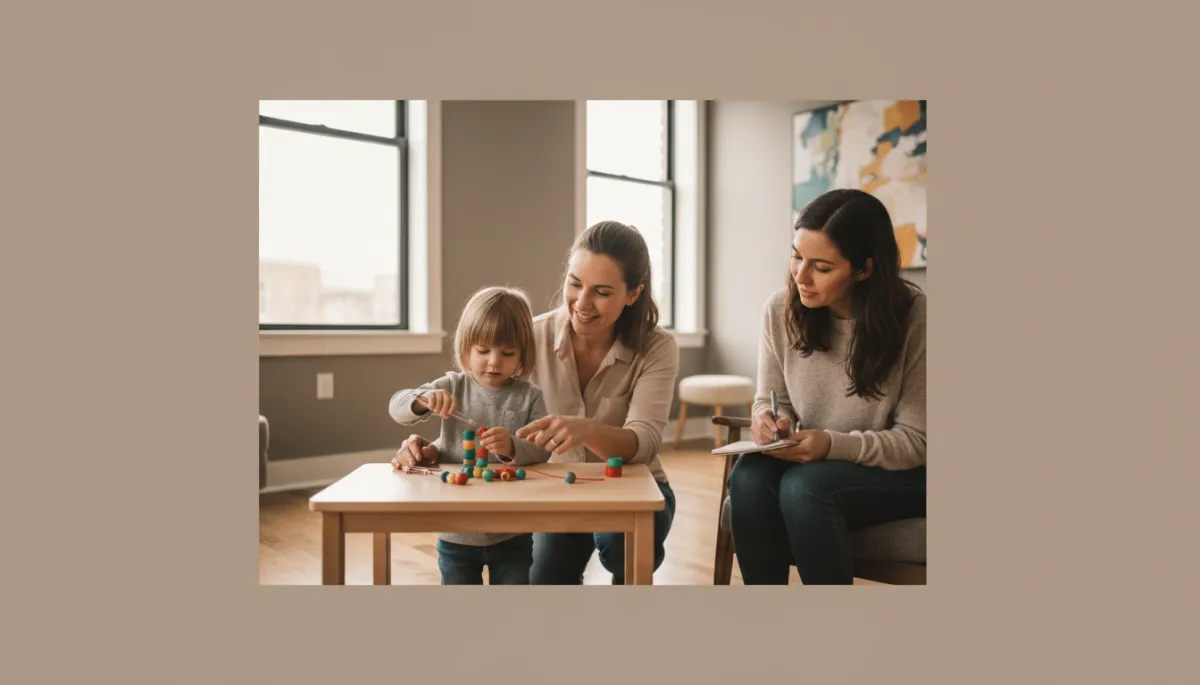
Private assessments often capture home, school, and community challenges in one integrated picture.
Which evaluation is more comprehensive?
In most cases, a private occupational therapy assessment is more comprehensive. Private evaluations often include:
In-depth parent interviews and questionnaires
Standardized testing across multiple skill areas
Clinical observations in play and structured tasks
Detailed analysis of strengths, challenges, and underlying factors
Written recommendations and home or school strategies
Goal development for ongoing therapy when appropriate
Referrals to other professionals (such as psychology, speech therapy, or developmental pediatrics) when needed
Reports commonly range from 10 to 20+ pages depending on the complexity of the child's needs. School evaluations are often thorough within their educational purpose, but they generally do not provide the same level of broad developmental analysis or detailed home recommendations.
Can a child qualify for one but not the other?
Yes. This is one of the most common situations I see in practice. A child may have legitimate difficulties with:
Sensory processing and sensory regulation
Fine motor skills and handwriting legibility or speed
Self-regulation and managing big emotions
Executive functioning, including organization and planning
Yet still perform adequately enough at school that they do not qualify for educational services. That does not mean the concerns are insignificant. It simply means the child does not meet the school's specific eligibility requirements for special education or related services. A private OT assessment can still identify needs and recommend therapy or home strategies even when the school cannot provide services.
Which evaluation happens faster?
Private assessments are often completed more quickly. While timelines vary by region and provider, many private clinics can schedule an evaluation within days to a few weeks, and provide a written report shortly afterward. School evaluations, on the other hand, must follow district and legal timelines. From the time parents consent, it can take several weeks to a few months for testing, team meetings, and eligibility decisions to be completed.
Families who are seeking immediate answers frequently choose a private assessment while also pursuing school-based supports in parallel.
Which evaluation costs more?
School evaluations are typically provided at no direct cost to families through the public education system. Private occupational therapy assessments, however, usually involve out-of-pocket expenses or insurance billing. Costs in the United States commonly range from approximately:
Around $1,500 to $5,000 for an initial evaluation, with many comprehensive pediatric assessments clustering near $3000–$6000, depending on length and reporting needs
$125 to $250 per follow-up therapy session, reflecting typical private OT rates in 2026
More extensive evaluations, or those that include additional standardized tests and lengthy written reports, can reach $800–$2,500+, especially in large metropolitan areas or specialty clinics. Some providers also charge additional fees for detailed written reports or sensory add-ons. These ranges align with recent national cost estimates for private OT services and comprehensive assessments.
If you're trying to decide whether the investment makes sense for your family, our complete guide on When Is a Private Occupational Therapy Assessment Worth It? walks through costs, benefits, and situations where an evaluation is or isn't worthwhile.
When should parents choose a private OT assessment?
A private assessment may be worth considering when:
School services have been denied, but concerns remain
Concerns extend beyond academics into home, community, or emotional functioning
Sensory processing challenges are significant or affecting daily life
Parents want detailed, individualized recommendations and a clear treatment plan
Progress has stalled despite current school or community interventions
Multiple developmental concerns are present, and you want a big-picture view
Many families seek private evaluations because they want answers rather than eligibility decisions. If you're unsure whether now is the right time to evaluate, read Should I Get an OT Assessment or Wait? for specific signs that suggest an assessment may be beneficial.
Should parents choose one or both?
For many families, the answer is both. School evaluations help determine what supports and accommodations are available through the educational system. Private assessments provide a broader understanding of the child's strengths, challenges, and treatment needs across all settings. When combined, parents often gain a more complete picture and can make more informed decisions about interventions, advocacy, and long-term planning.
Frequently asked questions
Can a school use a private occupational therapy evaluation?
Yes. Schools typically review private evaluations and may consider the findings as part of their decision-making process. However, districts may still conduct their own assessments before determining eligibility for school-based services, as they must follow specific legal criteria and procedures. Here is a breakdown of when school vs. private is better
Is a private OT assessment more accurate than a school evaluation?
Not necessarily. They simply answer different questions. School evaluations focus on whether a child's challenges impact educational access and whether services are legally required. Private assessments focus on understanding the child's overall functioning and what supports may help across daily life. Both can be high-quality and evidence-based within their respective scopes.
Can my child receive occupational therapy privately if they do not qualify at school?
Yes. School eligibility requirements do not determine whether a child may benefit from private occupational therapy services. Many children who do not qualify for school-based OT still make meaningful progress with private therapy focused on sensory processing, motor skills, self-care, or emotional regulation.
Does insurance cover private occupational therapy assessments?
Coverage varies widely by insurance plan, diagnosis requirements, provider network status, and local regulations. Some plans cover OT evaluations when they are considered medically necessary, while others may limit coverage or require pre-authorization and a physician referral. Because policies change frequently, families should verify benefits directly with their insurer and ask the provider’s office whether they assist with insurance billing or offer private-pay options.