Understanding Sensory Issues and Child Meltdowns
Sensory Processing, Child Meltdowns, Occupational Therapy
Can Sensory Issues Cause Meltdowns?
As a senior software engineer, I often think about systems: inputs, processing, and outputs. Children’s nervous systems work in a similar way. When the “input queue” of sensory information overflows, the system can crash—not with an error message, but with a meltdown. This post uses that systems mindset to unpack how sensory issues can drive intense emotional reactions, and what parents can do about it.
Can sensory issues cause meltdowns?
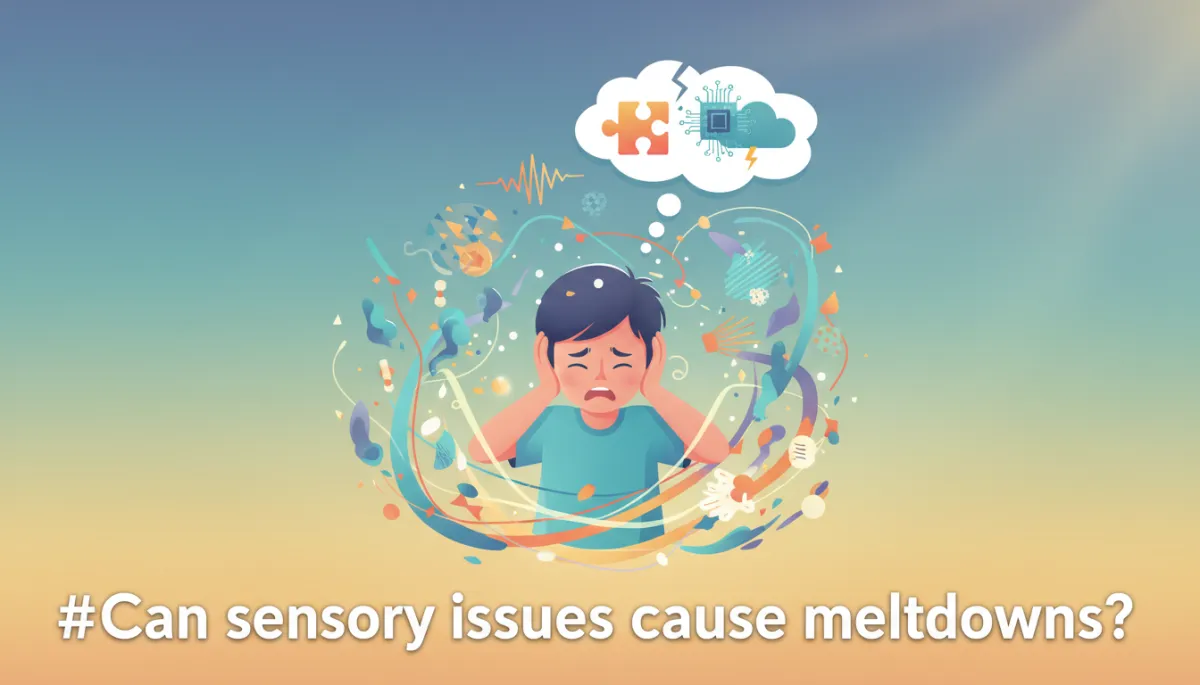
Yes, sensory issues can absolutely cause meltdowns. When a child becomes overwhelmed by sensory input such as sounds, textures, lights, movement, or other sensations, their nervous system may become overloaded, making it difficult to regulate emotions and behavior.
Many parents are surprised to learn that what looks like a behavioral problem may actually be a sensory processing challenge. A child who melts down in a grocery store, refuses certain clothing, or becomes extremely upset in noisy environments may not be choosing to overreact—they may be experiencing genuine sensory overwhelm.
Understanding the connection between sensory processing and meltdowns can help parents move beyond behavior management and begin addressing the root cause. Thinking in engineering terms, this is like fixing the bottleneck in the system instead of just retrying the same failing request over and over.
Key takeaways about sensory processing challenges
Sensory processing challenges are a common cause of meltdowns in children.
Everyday experiences that seem minor to adults can feel overwhelming to a child with sensory sensitivities.
Sensory overload can affect emotional regulation, attention, behavior, and participation.
Meltdowns caused by sensory overwhelm are different from intentional misbehavior.
Identifying sensory triggers is often the first step toward reducing meltdowns.
Occupational therapy can help children develop strategies to better manage sensory input.
💡 Pro Tip (Engineer’s Lens): Think of sensory supports—noise-cancelling headphones, softer clothing, dimmer lighting—as configuration changes that optimize system performance, not as “crutches.”
Can sensory issues really cause meltdowns?
Yes. Sensory issues can cause meltdowns when a child's nervous system becomes overwhelmed by information from their environment.
Every second, the brain processes information from:
Sight
Sound
Touch
Movement
Body awareness
Smell
Taste
For most children, this happens automatically. For children with sensory processing challenges, however, certain types of input may feel too intense, too distracting, or difficult to process. When the brain becomes overloaded, emotional regulation often becomes much harder—similar to a server under heavy load slowing down and timing out on simple requests.
This is why a child may appear calm one moment and then suddenly have a meltdown after entering a crowded store, hearing a loud noise, or being asked to wear certain clothing.
If your child experiences meltdowns frequently, sensory processing may be one piece of a larger picture. Read our pillar guide: Why does my child have so many meltdowns? for an overview of the most common causes.
What does sensory overload feel like for a child?
Sensory overload occurs when the brain receives more sensory information than it can effectively process. Imagine trying to focus while:
Multiple people are talking at once
Bright lights are shining in your eyes
Your clothing feels uncomfortable
Loud music is playing
Someone keeps touching your shoulder
Most adults would find that exhausting. For some children, everyday environments can feel like that all the time. When sensory input continues to build throughout the day, even a small frustration can trigger a large emotional response. This is one reason parents often describe their child as “overreacting” to situations that seem minor.
What sensory triggers commonly cause meltdowns?
Sensory triggers vary from child to child, but certain patterns are common. Think of each trigger as a recurring event that pushes the system closer to its limit.
Sound sensitivities
Children who are sensitive to sound may struggle with:
School cafeterias
Assemblies
Public restrooms
Vacuum cleaners
Hand dryers
Crowded environments
When noise levels become overwhelming, emotional reactions often follow.
Clothing and texture sensitivities
Many children experience significant discomfort from:
Clothing tags
Sock seams
Certain fabrics
Tight waistbands
Hair brushing
Tooth brushing
What appears to be stubbornness may actually be a response to physical discomfort.
Visual sensitivities
Some children become overwhelmed by:
Bright lights
Busy environments
Crowded classrooms
Excessive visual clutter
These environments can increase stress and make emotional regulation more difficult.
Movement sensitivities
Children may become distressed by:
Escalators
Swings
Elevators
Fast movement
Certain playground equipment
Others actively seek movement and become dysregulated when they do not receive enough sensory input.

Recognizing sensory triggers early lets parents adjust the environment before overload hits.
Why do sensory meltdowns often happen after school?
Many children work incredibly hard to manage sensory input throughout the school day. By the time they get home, they may have spent hours coping with:
Classroom noise
Social demands
Bright lighting
Busy hallways
Academic expectations
Unexpected changes
As a result, children often release their emotions in the place where they feel safest: home. Parents frequently describe after-school meltdowns as seemingly coming out of nowhere. In reality, the child's nervous system may have been working overtime all day, much like a production system that finally crashes once traffic spikes just a bit higher.
If your child struggles most before school rather than after school, you may also want to read Why does my child melt down every morning?
How do sensory meltdowns differ from tantrums?
Sensory meltdowns are typically driven by overwhelm, while tantrums are often goal-directed. During a sensory meltdown, a child may:
Cover their ears
Cry uncontrollably
Attempt to escape the environment
Become unable to communicate effectively
Need significant time to recover
Unlike a tantrum, the child is often unable to simply stop the behavior once the nervous system becomes overloaded. Understanding this distinction helps parents respond with support rather than assuming the behavior is intentional.
Why do some children overreact when they are sensory overloaded?
Sensory overload reduces a child's ability to cope with everyday frustrations. When a child's nervous system is already overwhelmed, even a small disappointment can trigger a large emotional response. Examples include:
The wrong color cup
A broken crayon
A change in plans
Difficulty with homework
Losing a game
The issue is rarely the event itself. The issue is that the child's system has little capacity left to manage additional stress. For a deeper look at this pattern, read Why does my child overreact to small frustrations?
Can sensory issues affect transitions?
Yes. Children with sensory processing challenges often struggle with transitions because transitions involve multiple demands at once. A child may need to:
Stop a preferred activity
Shift attention
Process new expectations
Adapt to a different sensory environment
This combination can be overwhelming. For example, moving from a quiet home environment to a busy classroom requires a significant sensory adjustment. If transitions consistently trigger emotional outbursts, read Why does my child have tantrums during transitions?
When should parents become concerned about sensory-related meltdowns?
Parents should consider further evaluation when sensory-related meltdowns are:
Frequent
Intense
Increasing over time
Affecting participation at home or school
Limiting family activities
Creating significant stress
Some children become so overwhelmed by sensory experiences that they begin avoiding activities altogether. Others struggle with friendships, school participation, or daily routines because sensory challenges affect their ability to engage comfortably. If you are unsure whether your child's reactions are within a typical range, read When should I worry about emotional regulation?
Can occupational therapy help children with sensory meltdowns?
Yes. Occupational therapy is one of the most common supports for children experiencing sensory processing challenges. Occupational therapists help identify:
Specific sensory triggers
Patterns of sensory overload
Environmental factors
Regulation challenges
Daily participation difficulties
Most importantly, therapy focuses on helping children develop the skills needed to process sensory information more effectively and participate successfully in daily life.
At Kerrie Rowe OT, families throughout Newport Beach, Costa Mesa, and surrounding Orange County communities often seek support when sensory challenges are contributing to emotional outbursts, daily struggles, or difficulty participating in activities. Through comprehensive assessments and individualized treatment plans, families gain a clearer understanding of their child's sensory needs and practical strategies they can use at home and school.
If you would like to learn more about private occupational therapy services, visit:
You can also learn more in our related article: Can OT help with meltdowns?
What should parents do if they suspect sensory issues?
Start by observing patterns. Ask yourself:
Are meltdowns happening in specific environments?
Are certain sounds, textures, or activities involved?
Do reactions occur after busy or stimulating situations?
Does your child avoid specific sensory experiences?
These observations often provide valuable clues. Understanding sensory triggers is not about labeling behavior. It is about understanding what your child is experiencing so you can better support them.
Frequently asked questions
Can sensory processing disorder cause meltdowns?
Yes. Children with sensory processing challenges may experience meltdowns when sensory input becomes overwhelming and exceeds their ability to cope.
What are signs of sensory overload in children?
Common signs include covering ears, avoiding certain textures, emotional outbursts, withdrawal, irritability, difficulty focusing, and intense reactions to sensory experiences.
Why does my child melt down in crowded places?
Crowded environments often contain multiple sensory demands, including noise, movement, lights, smells, and social interaction. For some children, this combination can become overwhelming.
Can sensory issues make children seem overly emotional?
Yes. When a child's nervous system is overloaded, emotional regulation becomes much more difficult, leading to reactions that may appear disproportionate to the situation.
Can occupational therapy help sensory processing difficulties?
Yes. Occupational therapy can help identify sensory challenges, improve regulation skills, and provide practical strategies that support participation at home, school, and in the community.
Final thoughts
Sensory issues can absolutely cause meltdowns, and for many children, sensory overload is one of the primary reasons emotional outbursts occur. When parents understand how sensory processing affects behavior, they often begin to see patterns that were previously difficult to recognize. What looked like defiance, stubbornness, or overreacting may actually be a child struggling to manage an overwhelming sensory experience.
By identifying sensory triggers and addressing the underlying challenges, families can help children feel more regulated, successful, and comfortable navigating everyday life—just as we’d stabilize and optimize a complex software system by understanding its inputs, limits, and failure modes, rather than blaming the system when it crashes.