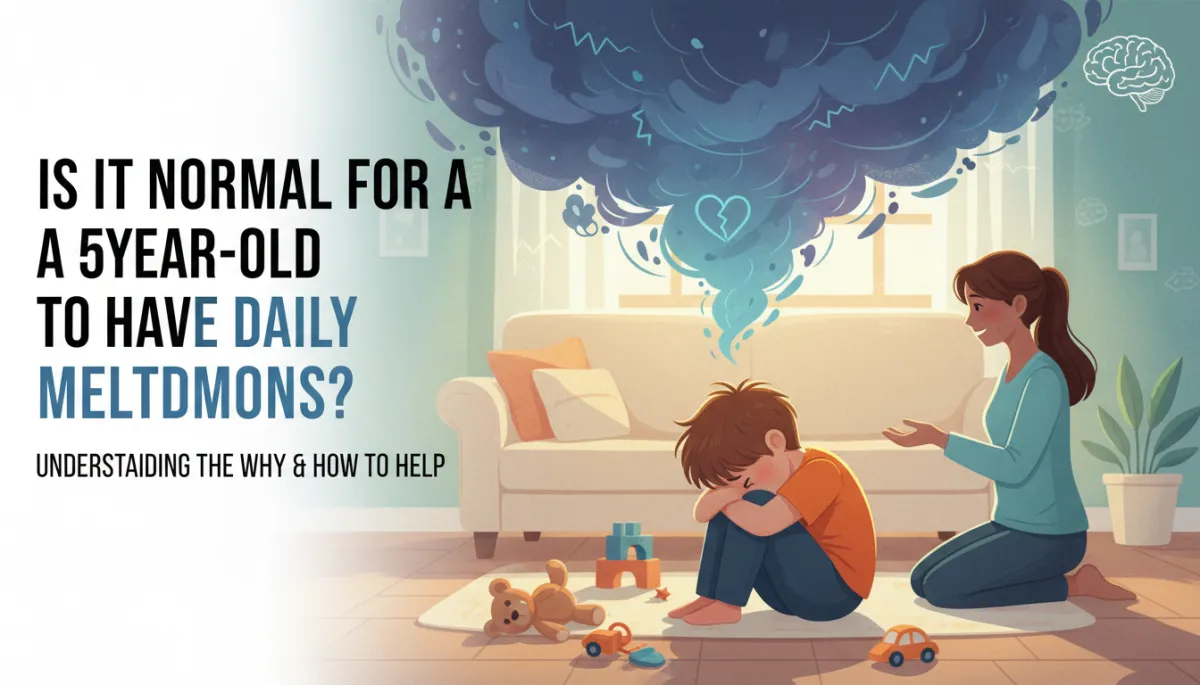
Understanding 5-Year-Old Meltdowns: Causes & Solutions
Parenting, Child Development, Emotional Regulation
Is it normal for a 5-year-old to have daily meltdowns?
Occasional meltdowns are a normal part of development for many 5-year-olds. However, daily meltdowns that are intense, disruptive, or affecting a child's ability to participate successfully at home, school, or in the community may indicate that something more is going on. The key is understanding why they are happening and how much they are impacting daily life.
1. Is it normal for a 5-year-old to have daily meltdowns?
Five-year-olds are still learning how to manage emotions, handle frustration, and adapt to new situations. Occasional meltdowns are expected as they practice these skills. That said, daily meltdowns—especially if they are intense, prolonged, or disruptive—are a signal to look deeper rather than something to ignore or simply “wait out.”
The important question is not just, “Does my child melt down?” but, “What is driving these meltdowns, and how much are they affecting life at home, school, and in the community?”
2. Key takeaways about meltdowns in 5-year-olds
Some meltdowns are developmentally normal for 5-year-olds and reflect skills still under construction.
Daily meltdowns may suggest challenges with emotional regulation, sensory processing, anxiety, or other underlying factors—not “bad behavior.”
Frequency, intensity, duration, and impact on daily life matter more than age alone.
Patterns around the meltdowns often provide powerful clues about what your child is experiencing.
Many children who have daily meltdowns are struggling with skills rather than willful misbehavior.
Occupational therapy can help identify and address the factors contributing to emotional outbursts.
💡 Pro Tip: If your child has meltdowns frequently across many situations, read the main pillar guide: Why does my child have so many meltdowns?
3. What is typical emotional behavior for a 5-year-old?
Most 5-year-olds still experience big feelings—frustration, disappointment, excitement, jealousy, and worry. Typical behaviors can include:
Becoming upset when losing a game or when things feel “unfair”
Crying when disappointed or when routines change unexpectedly
Arguing about rules or testing limits with adults and peers
Having occasional emotional outbursts, especially when tired or hungry
Needing adult support to calm down and recover from upsets
The difference is that most children this age can gradually recover with support and do not remain overwhelmed for long periods every day. A child who occasionally becomes upset is different from a child who experiences prolonged, intense meltdowns on a daily basis.
4. When do daily meltdowns become a concern?
Daily meltdowns become more concerning when they:
Happen multiple times per day or in many different settings
Last a long time and are hard to interrupt or soothe
Seem to be getting more intense over time instead of easing with age
Affect school performance, learning, or the ability to stay in class
Limit social participation or make it hard to maintain friendships
Cause significant family stress or conflict at home on a regular basis
Interfere with daily routines such as meals, bedtime, or leaving the house
📌 Key Takeaway: The goal is not to compare your child to others, but to ask: Are these emotional reactions making daily life unnecessarily difficult? For more detail, see When should I worry about emotional regulation?
5. Why does my 5-year-old melt down over small things?
Many parents are surprised by how intensely a 5-year-old can react to what looks like a small problem—the wrong cup, a broken crayon, a change in plans, losing a game, or difficulty completing a task. These moments can feel minor to adults, but to a child with still-developing skills, they can be the final straw in an already overloaded day.
Often, the visible trigger is not the full story. A child might already be dealing with sensory overload, fatigue, anxiety, or accumulated frustration. The “small” event is simply the last piece that pushes them beyond their ability to cope. For a deeper explanation, see Why does my child overreact to small frustrations?
6. Can sensory issues cause daily meltdowns?
Yes. Sensory processing challenges are one of the most common reasons children experience frequent emotional outbursts. Some children are especially sensitive to:
Loud or unpredictable noises (cafeterias, hand dryers, traffic)
Clothing textures, tags, seams, or tight waistbands
Bright lights or visually busy environments like big stores or classrooms
Crowded spaces and unexpected touch from others
Strong smells from food, cleaning products, or perfumes
When sensory input becomes overwhelming, a child's ability to regulate emotions often drops quickly. Parents may notice meltdowns after school, during errands, in busy environments, during grooming routines, or while getting dressed. If sensory challenges may be contributing, read Can sensory issues cause meltdowns?
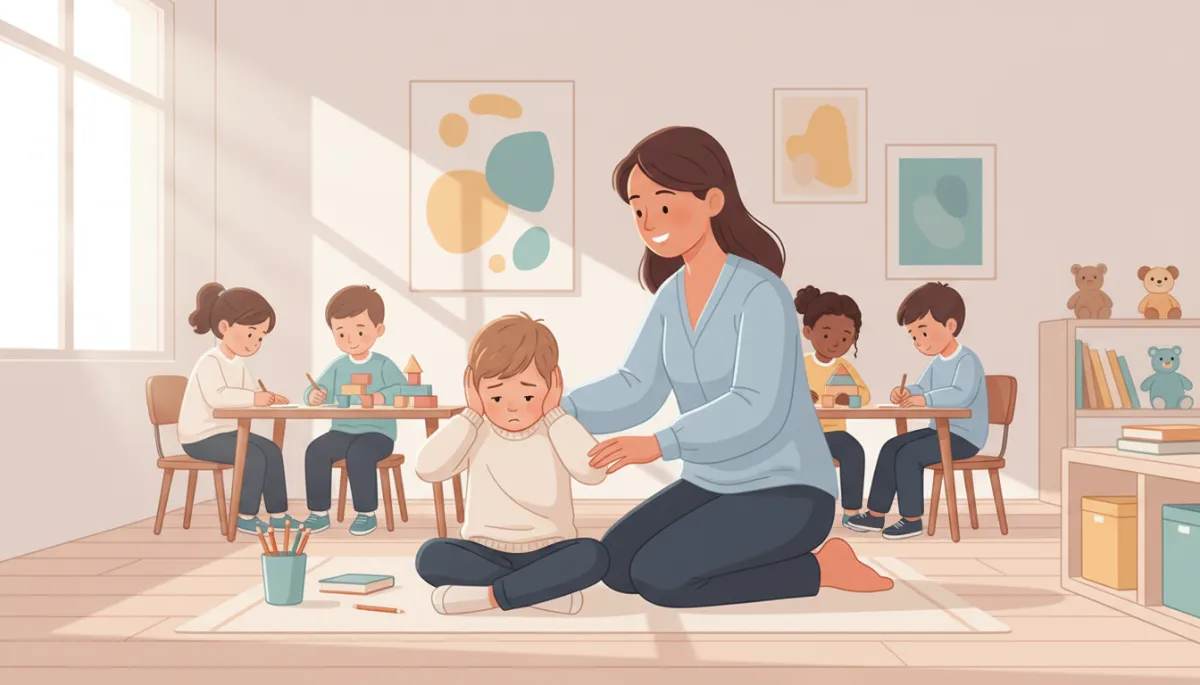
Sensory overload can drain a child’s coping capacity long before a meltdown appears.
7. Why do some 5-year-olds struggle with transitions?
Transitions demand flexibility, planning, and emotional regulation—skills that are still coming online at this age. Children often struggle when asked to leave a preferred activity, stop playing, turn off screens, go to bed, or get ready for school. For some, these moments create enough stress to trigger a meltdown.
This doesn’t automatically mean your child is being defiant. More often, it means they are having difficulty shifting from one state to another—especially if they’re tired, overstimulated, or unsure what’s coming next. To learn more, see Why does my child have tantrums during transitions?
8. Why does my child melt down every morning before school?
Morning routines are one of the most common triggers for emotional outbursts in young children. In a short window of time, kids are expected to wake up, get dressed, eat breakfast, transition away from preferred activities, and prepare for school. These demands involve sensory experiences, time pressure, and emotional shifts—all stacked together.
For a child who already struggles with regulation, mornings can feel overwhelming before the day even begins. If mornings are particularly challenging in your home, see Why does my child melt down every morning? for more specific strategies and examples.
9. Could anxiety be causing daily meltdowns?
Yes. Anxiety can significantly affect a child's ability to regulate emotions. A 5-year-old may be worried about school expectations, social situations, separation from parents, new experiences, or fear of making mistakes—but not yet have the language to explain those worries clearly.
Instead, anxiety may show up as emotional outbursts, irritability, avoidance, resistance, or frequent crying. When anxiety is part of the picture, focusing only on stopping the behavior often backfires. Addressing the underlying worry—through reassurance, predictable routines, and professional support when needed—is usually more effective.
10. Does having daily meltdowns mean something is wrong?
Daily meltdowns do not automatically mean a child has a diagnosis or a serious problem. They do, however, suggest that your child is working very hard to manage their world and may be missing some key supports or skills. Many children who melt down frequently need help with:
Emotional regulation and calming strategies
Sensory processing and managing overwhelming input
Coping skills for frustration and disappointment
Executive functioning skills such as planning and shifting attention
Communication and expressing needs in words instead of behavior
Understanding what is contributing to the meltdowns is often the most important step toward change.
11. Can occupational therapy help a 5-year-old with daily meltdowns?
Yes. Occupational therapy (OT) can be very helpful for children who experience frequent meltdowns. Instead of focusing only on the outward behavior, occupational therapists look at the whole picture, including:
Sensory processing and how your child responds to sound, touch, movement, and other input
Emotional regulation and what helps your child feel calm and safe
Daily routines such as mornings, mealtimes, homework, and bedtime
Executive functioning, including planning, transitioning, and following multi-step directions
Environmental demands at home, school, and in the community
At Kerrie Rowe OT, families throughout Newport Beach, Costa Mesa, and surrounding Orange County communities often seek support when their child is having frequent emotional outbursts. Through comprehensive assessments and individualized treatment plans, parents gain a clearer understanding of why the meltdowns are happening and what can be done to help.
To learn more about private occupational therapy services, visit:
and see the related article Can OT help with meltdowns?
12. What should parents do if their 5-year-old has daily meltdowns?
A helpful first step is to look for patterns rather than isolated moments. Ask yourself:
When do the meltdowns usually happen—mornings, after school, at bedtime?
What happened in the 10–30 minutes beforehand? Was your child hungry, rushed, or overstimulated?
Are transitions involved, such as turning off screens or leaving a preferred activity?
Could sensory challenges—noise, clothing, crowds—be contributing to overload?
Is your child tired, anxious, or worried about school or social situations?
Are certain environments (stores, playgrounds, classrooms) consistently more difficult?
The answers often reveal important clues about what your child is truly experiencing. When parents understand the underlying cause—whether sensory overload, anxiety, transitions, or skill gaps—they can begin addressing the real issue instead of only reacting to the behavior in the moment.
Frequently asked questions
Is it normal for a 5-year-old to have tantrums every day?
Occasional tantrums are common at this age. Daily, intense emotional outbursts may indicate challenges with emotional regulation, sensory processing, anxiety, or other underlying factors that are worth exploring with a professional.
How many meltdowns are normal for a 5-year-old?
There is no single “correct” number that fits every child. More important are the intensity, frequency, duration, and impact on your child’s daily life and participation at home, school, and in the community.
Why does my 5-year-old cry over everything?
Children who seem to cry over everything may be struggling with emotional regulation, sensory processing, anxiety, fatigue, or low frustration tolerance. Often, their emotional “bucket” is already close to full, so even small stressors spill it over quickly.
Should I be worried about daily meltdowns?
Daily meltdowns are a sign to pay attention, not a reason to panic. If they are frequent, intense, affecting participation, or causing significant family stress, seeking guidance from an occupational therapist, pediatrician, or mental health professional can provide clarity and practical support.
Can occupational therapy help emotional regulation in 5-year-olds?
Yes. OT can help children build regulation skills, manage sensory input, improve coping abilities, and participate more successfully in everyday activities at home, school, and in the community.
Final thoughts
Many 5-year-olds experience emotional ups and downs as they learn to navigate an increasingly complex world. Occasional meltdowns are part of normal development. However, daily meltdowns that consistently interfere with family life, school participation, or social experiences deserve closer attention and support.
Rather than asking whether your child's behavior is simply “normal,” a more helpful question is: What is making life difficult for my child right now? When parents understand the reasons behind the meltdowns—whether sensory processing, emotional regulation, anxiety, transitions, or another challenge—they are better equipped to provide the support their child needs to thrive.